How Do You Install A Weed Barrier Without Compromising Lawn Drainage?
A high-quality weed barrier is a vital component of any professional landscaping project, serving as the primary defense against invasive roots and soil contamination. However, the most common concern for property owners is ensuring that this protective layer does not act as a dam, trapping water and causing surface pooling.
Balancing the need for a sterile environment with the necessity of rapid water runoff is the key to a successful renovation. When executed with the right materials and techniques, a weed barrier enhances the lifespan of your lawn without ever hindering the flow of moisture into the subsoil.
Selecting High-Permeability Geotextile Fabrics
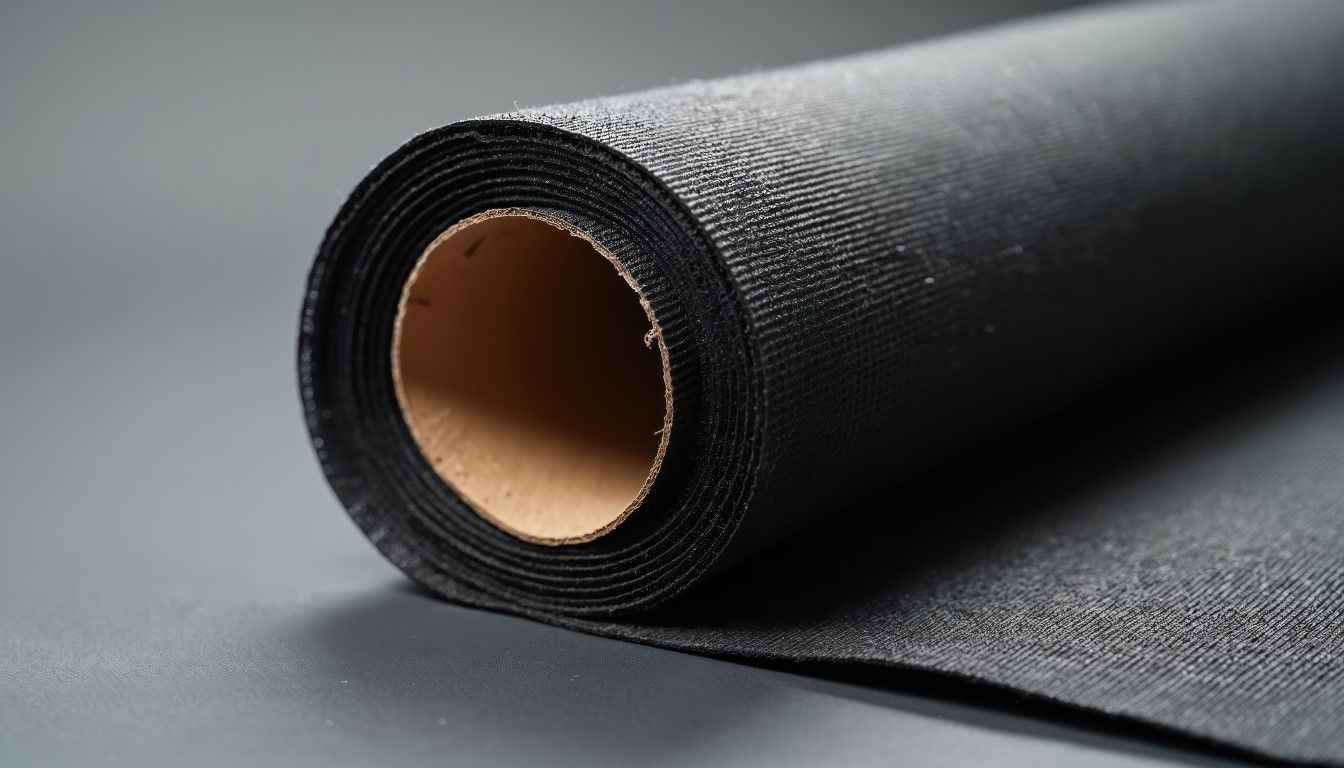
Not all landscape fabrics are created equal, and choosing a material with a high flow rate is the first step in protecting your drainage system. Professional-grade non-woven geotextiles are engineered with thousands of tiny pores that allow water to pass through while blocking the passage of sunlight and seeds.
- Opt for a needle-punched fabric that offers a high "gallons-per-minute" rating to handle heavy downpours.
- Avoid plastic-based or solid sheet barriers that are completely non-porous and lead to immediate standing water.
- Select a weight that is heavy enough to suppress weeds but light enough to maintain a high level of breathability.
The right fabric choice ensures that your barrier acts as a filter rather than a solid lid, keeping the system flowing freely.
Integrating the Barrier Within the Sub-Base
The placement of the weed barrier within the layers of your landscape foundation significantly impacts how water moves through the site. Many experts recommend placing the fabric between the native soil and the aggregate base to prevent fine dirt from clogging the stones above.
- Clear the area of all sharp debris that could puncture the fabric and create a bypass for both weeds and silt.
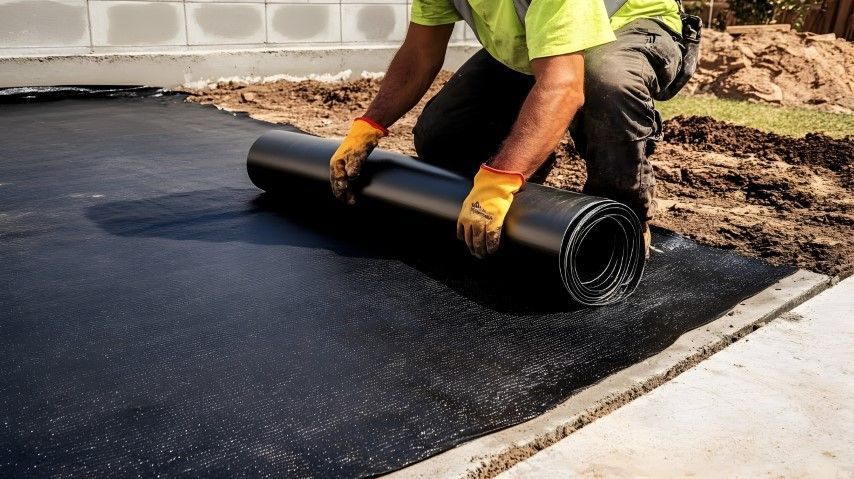
- Lay the fabric directly onto the excavated soil before adding your crushed stone or decomposed granite layers.
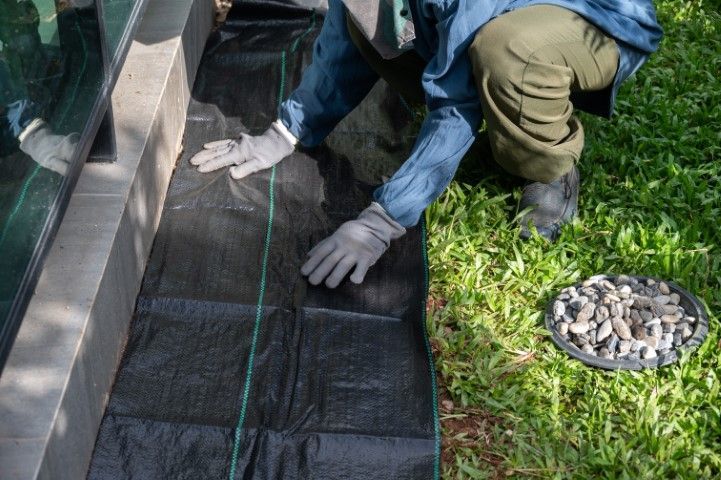
- Ensure the fabric is pulled taut to avoid folds or "cups" where water could collect and stagnate.
Strategic placement prevents "soil migration," which is the primary cause of drainage failure in older landscaping projects.
Executing Proper Overlap and Seam Management
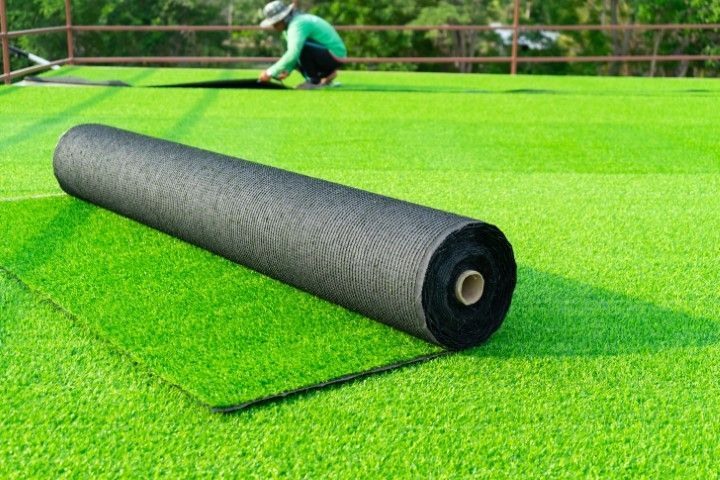
When installing multiple rolls of weed barrier, the way the sections are joined can either facilitate or frustrate proper water movement. Overlapping the edges ensures total coverage, but these seams must be handled carefully to avoid creating thick, impermeable ridges.
- Overlap all edges by at least six inches to ensure that no gaps open up during the compaction process.
- Use landscape staples to secure the seams tightly, preventing the fabric from shifting and bunching under the weight of the base material.
- Directional overlapping—placing the higher-side fabric over the lower-side—helps water glide over the seam and into the soil.
Properly managed seams create a continuous, protective skin that maintains a uniform drainage rate across the entire yard.
Maintaining Consistency in the Aggregate Layer
The materials placed on top of the weed barrier play a supporting role in keeping the fabric's pores open and functional. Using a clean, angular stone allows water to reach the barrier quickly and creates a "bridge" that prevents the fabric from being crushed into the mud.
- Ensure the base material is free of excessive "fines" or dust that could wash down and plug the fabric pores.
- Apply the first layer of stone carefully to avoid tearing the fabric with heavy machinery or tools.
- Monitor the compaction levels to ensure the base is solid but still porous enough to allow vertical water travel.
A well-structured aggregate layer protects the integrity of the barrier while providing the necessary paths for water to escape.
Perimeter Tucking and Edge Drainage
The edges of your lawn are often where water accumulates most, making the perimeter installation of the weed barrier a critical detail. Ensuring the fabric extends all the way to the border prevents weeds from creeping in at the seams while allowing water to exit toward the yard’s natural drainage points.
- Tuck the barrier into a trench at the edge of the installation to prevent it from "wicking" moisture back toward the surface.
- Ensure the fabric doesn't block the exit points of any French drains or perforated pipes integrated into the landscape.
- Trim the fabric flush with the header board or mow strip for a clean finish that doesn't trap debris.
Precision at the edges guarantees that your drainage system remains a closed loop, protecting your property from the outside in.
Securing a Dry and Weed-Free Landscape Future
Achieving a pristine, low-maintenance lawn does not require a trade-off between weed protection and effective water management. By following professional installation standards, you can enjoy a landscape that remains bone-dry and structurally sound regardless of the weather.
The invisible work performed during the fabric installation is what ultimately defines the success of your outdoor renovation. A correctly installed weed barrier is a silent partner in your home's longevity, providing a stable foundation for years of worry-free enjoyment.